







Vegan Challah Bread

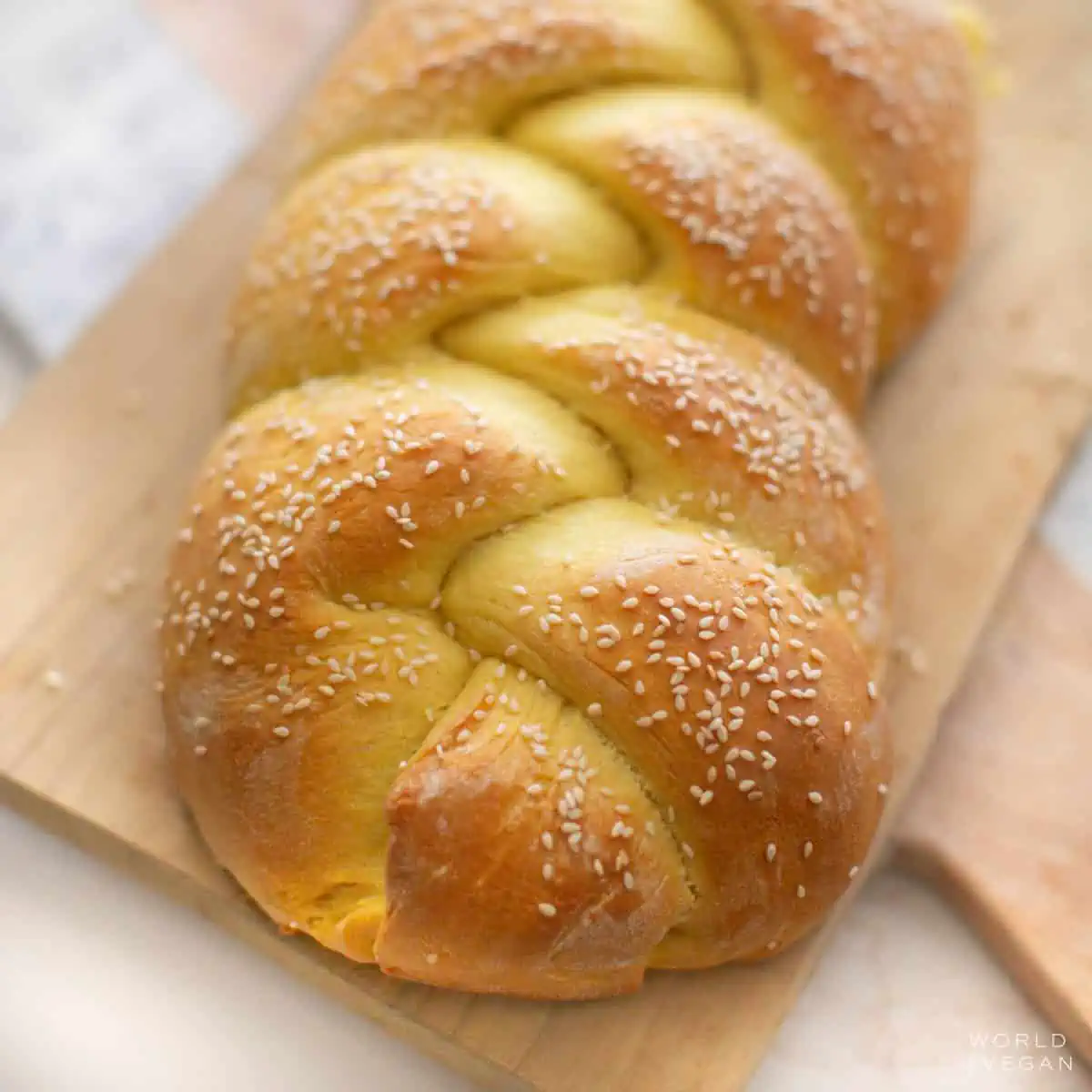
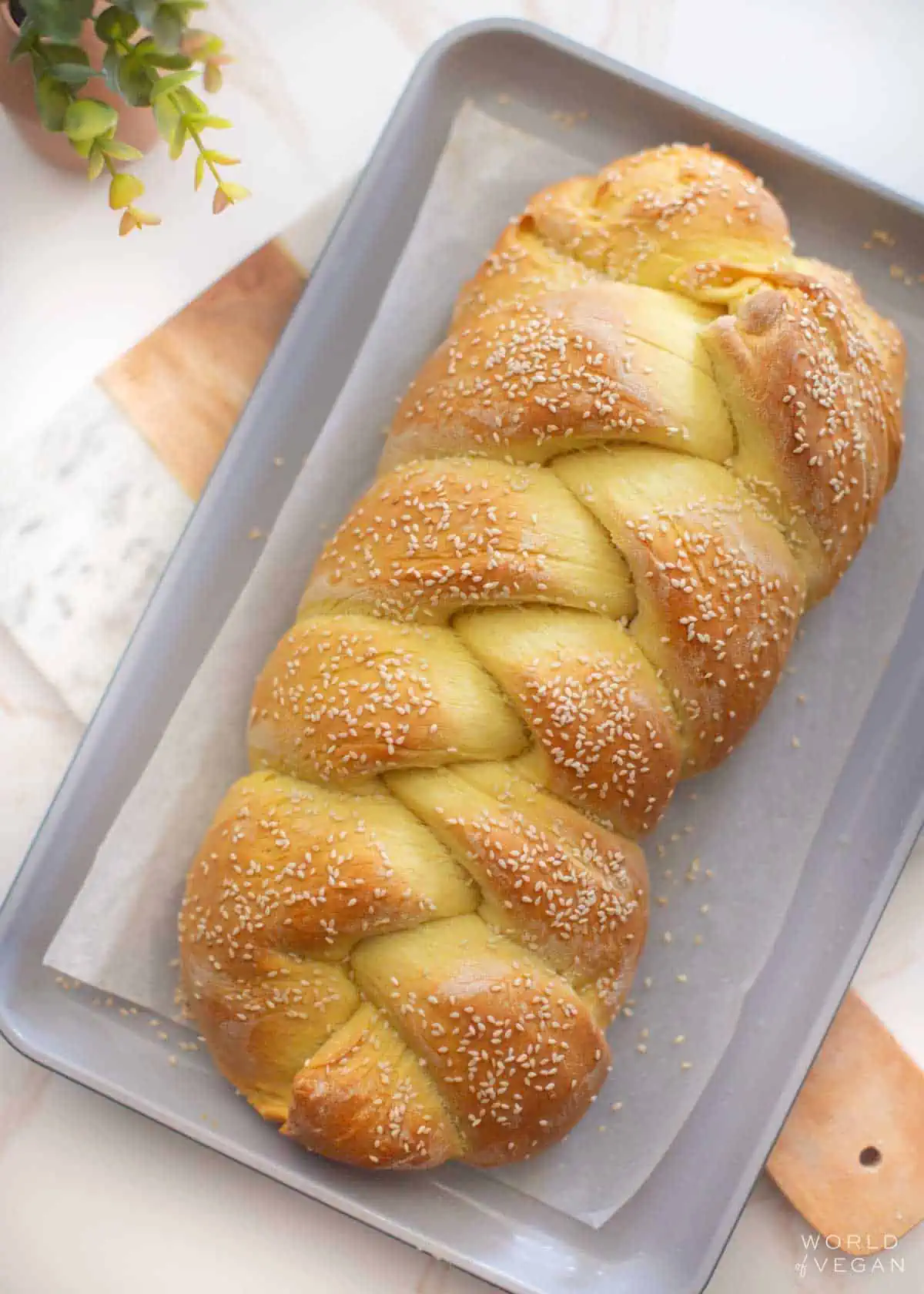
Vegan challah is a soft, slightly sweet bread that’s known for its golden braids and special place at the table. It’s often made for Shabbat and holidays, but it’s just as wonderful to bake and share any time. Traditional challah uses eggs for its color and texture, but this version uses simple plant-based swaps to get the same result. The best part is you still get that fluffy crumb and beautiful loaf without missing a thing.
This bread has all the charm of the classic while being friendly to every diet. It’s tender, flavorful, and perfect for pulling apart with family or toasting for breakfast the next day. The recipe is simple and beginner-friendly, even if you’ve never braided dough before. In this guide, you’ll learn the steps, helpful tips, and tricks to make a loaf you’ll be proud to serve and enjoy.
If you’re looking to expand your vegan baking repertoire, here are more amazing vegan bread recipes to try!


- It’s Egg-Free but Still Fluffy. You don’t need eggs to get that soft, pillowy texture. Simple swaps keep it light and fluffy, just like traditional challah.
- Perfect for Any Occasion. Whether it’s Shabbat, a holiday, or just a cozy weekend, vegan challah fits right in. It always feels a little extra special on the table.
- Braiding is Fun. The braids make it look impressive, but they’re actually easy once you try. It’s a hands-on step that makes baking feel creative.
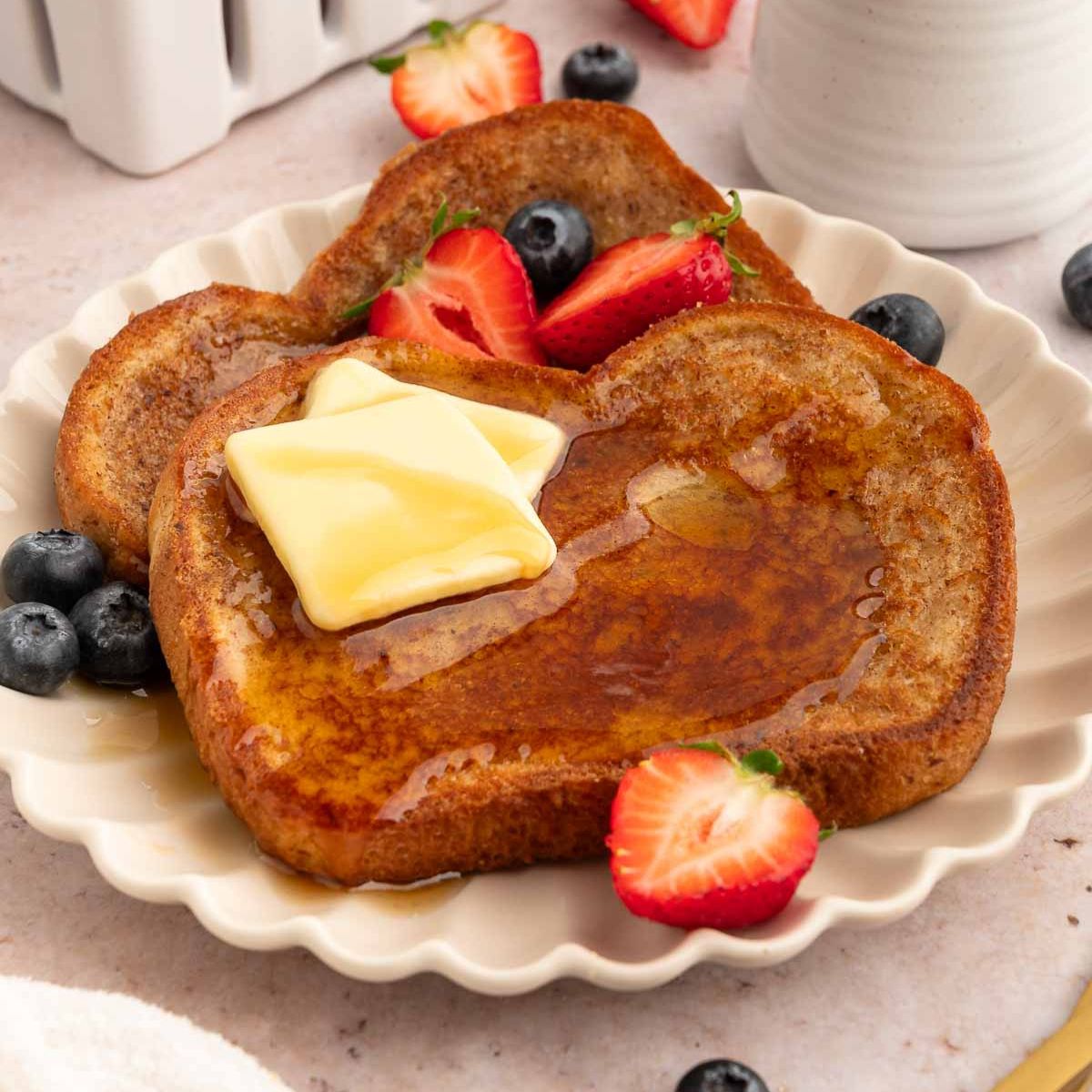
- Delicious Leftovers. If you have any left, it makes amazing French toast, veggie-filled sandwiches, or simply toasted with a little sweet spread. It’s versatile and never goes to waste.
- Simple Ingredients, Big Flavor. With pantry staples and plant-based swaps, you can bake a loaf that’s soft, golden, and full of flavor. It proves that simple can be seriously tasty.

Key Ingredients and Substitutions
Creating a vegan challah is easier than you might think, and we’ve included our favorite easy challah recipe below! Here are some common plant substitutes for the animal ingredients in traditional challah:
- Active Dry Yeast – Makes the dough rise and gives challah its fluffy texture. Make sure it’s fresh and bubbly before mixing it in, so your bread turns out light. If you only have instant yeast, you can use that too—just skip the proofing step and mix it right in.
- Sugar – Feeds the yeast so the dough rises, and it adds a gentle sweetness to the bread. White sugar is classic, but you can swap with cane sugar, coconut sugar, or even maple syrup. Just keep in mind that darker sugars may change the color slightly.
- Coconut Oil – Adds richness and helps give the bread a soft texture. If you don’t like the flavor, use refined coconut oil for a neutral taste. You can also swap it with canola oil, olive oil, or even melted vegan butter.
- Agave Nectar – Adds extra sweetness and moisture, making the bread tender. If you don’t have agave syrup, maple syrup or simple syrup work just as well. You can even use sugar, but liquid sweeteners tend to give the best texture.
- Turmeric – Helps give the challah that classic golden color since eggs aren’t used. Don’t worry—you won’t really taste it! If you don’t have turmeric, saffron (steeped in warm water) or just leaving it out still works fine.
How To Make Eggless Vegan Challah
Making challah (or any bread, for that matter) is a labor of love, but the outcome is worth it! There’s nothing like the delicious aroma of freshly baked bread wafting through your home. Let’s get started!
Step 1: Activate Yeast – Warm water in a microwave-safe bowl for about 1 minute until warm but not hot. Add 1 teaspoon of sugar and dissolve. Sprinkle yeast over it, and allow the yeast to activate for 7 minutes.
Step 2: Prepare Dough Base – Meanwhile, Heat coconut oil in the microwave for 30 seconds or until liquid. Set aside. In a large bowl, mix half the flour, ½ cup of sugar, baking powder, salt, and turmeric.
Then, Step 3: Combine Ingredients – Add the yeast mixture and melted coconut oil to the dry ingredients. Stir until combined. Slowly add the remaining flour and knead the dough for 10 minutes until smooth.

Step 4: Let Dough Rise – Grease a bowl, place the dough inside, cover loosely with a damp towel, and let it rise for about 1 ½ hours in a warm spot.

Step 5: Shape and Bread – Roll the dough in a long, thick snake (14 to 16 inches). Cut into thirds and roll each piece into 14 to 14-inch strands. Braid the strands, tucking the ends.

Next, Step 6: Second Rise – Place the braided dough on a baking sheet, cover it with a damp towel, and let it rise for 50 minutes.
Step 7: Preheat and Glaze – Preheat the oven to 350 degrees F. Spread agave evenly on the loaf, and sprinkle sesame or poppy seeds over top. Bake for 35 to 40 minutes until golden brown.

Lastly, Step 8: Cool and Enjoy – Allow the challah to cool completely before serving. Tear or slice and enjoy!
Serving Tips and Add-In Suggestions
Vegan challah is delicious on its own, but it’s also fun to dress up with tasty add-ins or creative serving ideas. From sweet spreads to savory toppings, there are plenty of ways to make each loaf feel special and unique:
- Raisins or Currants – Add a touch of sweetness and texture.
- Cinnamon and Sugar – Turn your challah into a delicious cinnamon challah roll by folding cinnamon, sugar, and butter into the dough.
- Sesame Seeds or Poppy Seeds – These little seeds give added flavor and a more elegant appearance.
- Chopped Nuts – For a delightful crunch and nutty undertones, choose candied walnuts or sweetened pecans.
- Herbs – Infuse with rosemary, thyme, or basil for a savory hint.
- Dried Fruits – Perfect for bursts of flavor with apricots, cranberries, dates, or figs.
- Chocolate Chips – Use vegan chocolate chips (or white chocolate!) for sweetness and indulgence.
- Mock Meat – For a savory twist, serve vegan chopped liver alongside this soft bread.
Braiding Challah
Braiding challah is not just a technique; it’s an art form. Try different methods to create captivating designs:
- Three-Strand Braid – The classic and elegant choice.
- Four-Strand Braid – A step up in complexity, yielding a stunning result.
- Six-Strand Braid – The pièce de résistance, perfect for special occasions like an elaborate 6-braided challah.
Special Occasions to Break (Challah) Bread
Challah can be enjoyed any time of the year, by anyone, but it really takes the spotlight during the following Jewish holidays:
- Shabbat (Sabbath) – The cherished bread for Friday night and Saturday morning meals.
- Rosh Hashanah – Symbolic round challah represents the cyclical nature of life for Rosh Hashanah.
- Yom Kippur – A special challah variant called “kelach” is often enjoyed before the fast.
- Hanukkah – Challah joins the Festival of Lights festivities.
FAQs
Challah (pronounced “hah-lah”) is a soft, slightly sweet bread with a beautiful braided shape that symbolizes unity and togetherness. It’s a staple for Shabbat and often enjoyed on Jewish holidays and special occasions.
Challah isn’t vegan because it’s usually made with eggs and sometimes honey, milk, or butter. Luckily, with a few easy swaps like flax eggs, non-dairy milk, and maple syrup, you can make a vegan version that’s just as soft, sweet, and delicious.
They are like cousins—both a little sweet, but not the same. Brioche is richer with butter and eggs, while challah is lighter with its signature braids. Vegan challah keeps all that soft, sweet goodness without the eggs, making it perfect for Shabbat, holidays, or just enjoying fresh from the oven with family and friends.
Challah is best enjoyed fresh but if you have some leftover here are the best ways to store it:
Room temperature: Once the challah is cooled, store it in an airtight container or bag at room temperature in a cool, dry place away from direct sunlight for up to 2-3 days.
Refrigerator: If you intend to keep the challah fresh for up to a week, consider refrigerating it, keeping it in an airtight container or resealable bag for maximum fresh ness.
Freezer: For extended storage, you can freeze it. Slice the loaf and store it in a freezer-safe container or bag so you can pull out a slice to toast whenever the urge hits.
Store-bought vegan challah is not yet widely available at most local vegan bakeries; but you may get lucky! If you have a bakery in your neighborhood, you can also make a special request that they carry vegan challah. Send them this recipe as a resource!

More Vegan Bread Recipes
Listen while you cook! Tune into my podcast, The Plant Powered People Podcast, while you’re cooking, folding laundry, or taking a bath. It may just change your life!

Vegan Challah Bread


Ingredients
- 1 cup water, + 3 tablespoons
- 1 teaspoon granulated sugar, plus ½ cup, divided
- 2½ teaspoons active dry yeast
- ¼ cup refined coconut oil, plus 2 tablespoons
- 4 cups all-purpose flour, divided
- 2 teaspoons baking powder
- 2 teaspoons salt
- ⅛ teaspoon ground turmeric
- 2 tablespoons agave
- 1 tablespoon sesame seeds, or poppy seeds
Instructions
- In a small microwave-safe bowl, warm the water in the microwave for about 1 minute. (It should be warm but not hot to the touch; if you have a food thermometer, it should register 105 to 110 degrees F.) Sprinkle in 1 teaspoon of the sugar and swirl it around so it dissolves. Lightly sprinkle the yeast into the sugar water and allow the yeast to awaken for 7 minutes.
- In another small microwave-safe bowl, heat the coconut oil in the microwave for 30 seconds or just long enough to bring it to a liquid state. Set aside.
- In a large bowl, combine 2 cups of the flour with the remaining 1⁄2 cup of sugar, baking powder, salt, and turmeric and mix with a fork.
- Add the yeast mixture and melted coconut oil to the dry ingredient mixture and stir until combined. Slowly add the remaining 2 cups of flour and, using your hands, knead the dough for a full 10 minutes, until all the flour is incorporated and you have a smooth dough.
- Grease a large bowl. Place the dough ball in the bowl, cover loosely with a damp towel, place in a warm area (such as near the oven or in the sun), and allow to rise for about 1 1⁄2 hours.
- After the time has passed, very lightly flour a flat surface and roll your risen dough into a long, thick snake 14 to 16 inches long. To make a classic three- strand braid, cut the dough into equal thirds. Starting in the center of the dough piece and using your hands to gently roll outward, roll each piece into a strand that is 12 to 14 inches long with the ends slightly tapered. Once all three dough pieces are rolled out, bring one end of each strand together and massage them firmly together to stick. Just as in a traditional braid, bring the left strand over the center one, making the left strand the new center strand. Then bring the right strand over the center strand, making that the new center strand. Repeat this pattern (left to center, right to center, and so on) until you reach the end of your strands. Press the ends together and tuck them under the end of your loaf. Go back and tuck the top of the loaf as well to produce rounded ends.
- Line a baking sheet with parchment paper or a silicone mat. Place your loaf on the baking sheet, cover with a damp towel, and allow to rise for another 50 minutes.
- Preheat the oven to 350 degrees F.
- Once your loaf is looking nice and puffy, remove the cloth. Using a basting brush, lightly spread the agave evenly across the entire loaf, including the sides. Sprinkle the loaf with the sesame or poppy seeds. Bake for 35 to 40 minutes, until the top is hardened and a rich golden brown.
- Allow to fully cool before wrapping with a challah cover or towel. Tear (or slice) and enjoy!
Notes
Nutrition
 Love this Recipe? Leave a Rating!And follow @Vegan on Instagram for more.
You may also like...

Enter to Win Our Monthly Giveaway!
New winner every month! Drop your name below for a chance to win hundreds of dollars of vegan prizes from our brand partners. You’ll also receive our weekly e-newsletter with plant-based recipes galore!
Leave a Comment
Soft and delicious!
So pretty and so yummy!
Oh yum! This vegan challah bread is so good, fluffy, and the perfect amount of sweet!
Love this challah… so great to have it veganized!
This vegan challah is to die for! It has the perfect soft and fluffy texture. I brought this home to my family and they couldn’t even tell it was vegan!
another great recipe from your blog! keep them coming. your tips are really helpful!
This recipe is delicious and the texture is wonderful. Love!
This was so therapeutic to make! The pinch of turmeric added the loveliest pale gold color and the seeds got nice and toasty on top. 🙂
This is such a clever recipe. I’ve only made challah once before and was on my list to make again for a long time. I’m super excited by your vegan version and it’s spurred me on. What a brilliant recipe.